

Wednesday, March 10, 2010
| Register


Location:
3925 Johns Creek Court Suite A
Suwanee GA 30024

Office hours:
8 to 4 Monday, Tuesday, Thursday, Friday
8 to 12 Wednesday

Closed on Federal Holidays

Phone: 678.474.4742
Fax: 678.474.0095

 Answering service 24 hours

  Site by
S X Tech, Inc. Technology Services
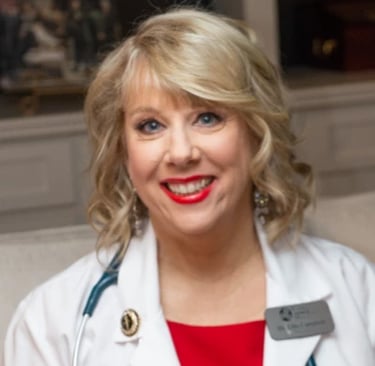
       Ellie Campbell, DO                          Benita Farmer LPN                          Natalie Patierno, CLE


 Swine Flu - What can you do to protect yourself?

***********************************************************************************************

As patients of CFM, we want you to have the most up to date and important information regarding this scenario.  It is important that you are informed and we encourage you to talk to your doctor especially if you think you could have been exposed or if you have a weakened immune system.  Your individual circumstances may play an important role in the treatment or prevention of this or similar conditions.  We hope that you will read the information on this page in its entirety so that you can have an intelligent and informed discussion with your physician.

Signs and symptoms

 
Main symptoms of swine flu in humans.[14]

According to the Centers for Disease Control and Prevention (CDC), in humans the symptoms of swine flu are similar to those of influenza and of influenza-like illness in general. Symptoms include fever, cough, sore throat, body aches, headache, chills and fatigue. A few more patients than usual have also reported diarrhea and vomiting.[15]

Because these symptoms are not specific to swine flu, a differential diagnosis of probable swine flu requires not only symptoms but also a high likelihood of swine flu due to the person's recent history. For example, during the 2009 swine flu outbreak in the United States, CDC advised physicians to "consider swine influenza infection in the differential diagnosis of patients with acute febrile respiratory illness who have either been in contact with persons with confirmed swine flu, or who were in one of the five U.S. states that have reported swine flu cases or in Mexico during the 7 days preceding their illness onset."[16] A diagnosis of confirmed swine flu requires laboratory testing of a respiratory sample (a simple nose and throat swab).[16]


Important Information that you should know but the media does not tell you...


 Copied from the Council on Vitamin D official website

Epidemic Influenza and Vitamin D

In our recently published paper, Epidemic Influenza and Vitamin D, we document the evidence that epidemic influenza, and even some of the viruses that cause the common cold, may be prevented by adequate doses of vitamin D. The Independent ran a feature article on our paper and Medical News Today was kind enough to print a detailed article about how the observations were made, the theory developed, and the paper written.

Vitamin D Deficiency Season

When you think about it, the flu and cold season is indistinguishable from the vitamin D deficiency season. Every autumn, as vitamin D levels plummet, the incidence of colds and flu skyrocket. After vitamin D levels bottom out during the darkest days of the cold and flu season, vitamin D levels rise again in the spring and the incidence of colds and flu steadily decrease until they virtually disappear during the vitamin D rich summer. It may be quite simple. Your body's innate immunity, especially the production of innate natural antibiotics called antimicrobial peptides, goes up and down every year with your vitamin D levels. (Acquired immunity is quite different, those are the antibodies you slowly develop after an infection or a flu shot.) Maintaining summer-time vitamin D levels in the winter—by taking adequate amounts of vitamin D (5,000 IU)—may help prevent colds or the flu by stimulating innate immunity. Preventing some of the one million deaths in the world every year from flu related illnesses is exciting enough; an equally exciting possibility is that large doses of vitamin D may be useful in treating the flu—as well as other infections.

Acquired Immunity vs. Innate Immunity

In reviewing the influenza literature, American influenza experts remind me of the man who fell in love with one twin sister, ignored the other, and thus took the road that Robert Frost warned against, "the road more traveled by." Both girls were beautiful, intelligent, and had enchanting depths to their characters. His chosen one was popular and steady, her twin was distant and volatile. The man wooed and married the steady one, spending his life trying to understand his constant wife while dismissing her mercurial sister. However, the man went to his grave understanding neither his constant wife nor her cyclical sister. As anyone who has married a twin will tell you, twins are intimately attached and you must get to know them both if you are to understand either. Long ago, American flu experts fell in love with Ms. Acquired Immunity (boosting antibodies with flu shots), while ignoring her twin, Ms. Innate Immunity (the body's inherent ability to immediately attack and kill the flu virus). Throughout their seventy year marriage to Ms. Acquired Immunity, American influenza experts failed to notice that Ms. Innate Immunity's mercurial nature went up and down with the seasons of the year.

Effect of Flu Shots "Modest" at Best

American influenzologists continue to believe that flu vaccines, which stimulate acquired immunity or viral-specific antibodies, will protect us from the coming pandemic. They have spent their lives plumbing the depths of Ms. Acquired Immunity, trying to develop a better flu vaccine. Unfortunately, a recent meta-analysis in the British journal, the Lancelet, concluded, "In elderly individuals living in the community, (influenza) vaccines were not significantly effective against influenza, influenza-like illness, or pneumonia." The authors concluded the overall effect of flu shots is "modest," at best. "Modest" is a complicated medical term that means "not much." Edwin Kilbourne, the grandfather and reigning godfather of American influenzologists said it better, "The effect of current vaccination programs on morbidity is insignificant, and that on mortality marginal." Jefferson T, Rivetti D, Rivetti A, Rudin M, Di Pietrantonj C, Demicheli V. Efficacy and effectiveness of influenza vaccines in elderly people: a systematic review. Lancet. 2005 Oct 1;366(9492):1165–74. Kilbourne E. Influenza. 1987, Plenum Press, New York, p. 291.

British influenzologists have not been as infatuated with acquired immunity as their American counterparts. The roads first diverged between British and American virologists many years ago when three Brits (Andrewes, Laidlaw, and Smith) were credited with discovering the influenza virus; the Yanks thought Shope (who had earlier isolated the virus in pigs) should have had the honor. Then, in 1976, British experts warned the United States not to embark on the mass immunization of 43,000,000 Americans with the swine flu vaccine. The Americans ignored the British warning, which proved prophetic when swine flu failed to appear, but an outbreak of immunization related Guillain-Barre Syndrome did. The program was halted and the director of the Centers for Disease Control (CDC) fired. For a fascinating set of papers on influenza that deals with these and other issues—available for free—go to the CDC website.

Influenza's Most Remarkable Aspect

When you read these papers, you'll see American virologists continue to ignore the most remarkable aspect of influenza—it kills us in the winter but virtually disappears in the summer. In 1992, the British epidemiologist, Edgar Hope-Simpson, wrote that understanding influenza's "seasonal factor may be of critical value in designing prophylaxis against the disease." In effect, he was reminding his American colleagues that the key to influenza may not be down the road of boosting acquired immunity by flu shots but rather through better understanding innate immunity. Among the last sentences Hope-Simpson ever published, he pleaded that "it might be rewarding if persons, who are in a position to do so, will look more closely at the operative mechanisms that are causing such seasonal behavior." That was a plea to American influenza experts to look more closely at innate immunity. They ignored his plea and continued down "the road more traveled by." For those who like scientists who took the other road, "the road less traveled by," Hope-Simpson's 1992 book, The Transmission of Epidemic Influenza (The Language of Science), is a masterpiece.

Not only were Hope-Simpson's words ignored, some American influenzologists ridiculed his "seasonal factor" as evidence of British scientific naiveté. Now, fifteen years after Hope-Simpson's plea, U.S. influenzologists are preparing for another mass flu immunization, this time against bird flu, to stimulate their lover, Ms. Acquired Immunity while ignoring her sister Ms. Innate Immunity. While Ms. Acquired Immunity is lovely, dark and deep, American flu experts "have promises to keep, and miles to go before" they sleep. As Robert Frost said, they failed to take "the road less traveled by (innate immunity) and that has made all the difference."

John Jacob Cannell MD Executive Director


Questions and Answers


John Cannell, MD
Vitamin D Council Newsletter

May 16, 2009


I have received hundreds of emails from readers, asking what they should do about the possibility of an H1N1 flu pandemic.


Dear Dr. Cannell:


1.    Should I take Vitamin D to prevent the H1N1 flu?  If so, how much? 


2.    What role did Vitamin D play in the 1918 pandemic?


3.    If I get this flu, should I take very high doses of vitamin D?  Is so, how much?


4.    Should I take the special flu vaccine the CDC and others are developing?


5.    What are you going to do for your family about the 2009 flu?


6.    Why do the CDC and NIH ignore the Vitamin D studies?


The Public, USA


Dear Public:


First read what I have written about influenza.  Both papers can be downloaded and printed out in their entirety:


My short executive answers:


1)    Take enough Vitamin D3 to get your 25(OH)D level above substrate starvation levels (50 ng/ml or 125 nmol/L).  Levels of 50 ng/ml usually require at least 5,000 IU per day for adults, some adults will require more.  Children should take 1,000 IU per every 25 pounds of body weight.  After taking this dose for 3 months have a 25(OH)D level.  Individual variation in dose response is great and natural 25(OH)D levels (50-70 ng/ml) are not assured by these doses.  For reasons I will discuss below, I think it possible that Vitamin D levels of 30 ng/ml, which are often obtained by people taking low doses of Vitamin D (1,000 to 2,000 IU/day), may increase your risk of death from a 1918-like influenza virus. 


2)    It is clear to me that Vitamin D did not play a controlling role in 1918.  The lethality of the 1918 virus easily overwhelmed innate immunity although I am unwilling to impair my innate immunity by taking inadequate doses of Vitamin D.


3)    Stock you homes pharmacy with several fresh bottles of 50,000 IU capsules of Vitamin D3,  a medicine, not a supplement, and if you get this flu, take 2,000 IU per kg of body weight per day for a week.  As I weigh 220 pounds, I would take 200,000 IU per day for seven days if I thought I had an infection with a 1918-like influenza virus.


4)  Get the H1N1 flu shot as soon as it is available in the fall, especially if the virus shows evidence of lethality this summer in the southern hemisphere,  For reasons I will discuss, a flu shot probably will not generate an immune response in people with 25(OH)D levels above 50 ng/ml but that is simply conjecture.  That is, the flu shot may not work, may not generate antibodies, in people with 25(OH)D levels above 50 ng/ml.  In my opinion, the risk of a lethal virus is higher than the risk of Guillain-Barré Syndrome.  In fact, the risk of Guillain-Barré Syndrome is probably the highest in non-vaccinated people who are infected with the virus and quite low in those who take a modern flu vaccine.


5)   Besides the above actions, stock up on TamiFlu in your home medicine cabinet so you have it next fall and winter.  And follow common-sense precautions, especially frequent hand washing.


6)   Most medically trained physicians, scientists or practitioners think in terms of something bad causing illness, not something good preventing it.  Ask any physician what George Bernard Shaw meant when he said, the characteristic microbe of a disease might be a symptom instead of a cause.  The idea that seasonal influenza or the common cold is a symptom, even the presence of the virus itself being a symptom of an underlying condition, is foreign to modern medical thought.  Influenza researchers at the CDC and NIH think only in terms of vaccines and anti-virals, mainly because most of them have such strong economic affiliations with some aspect of the influenza industry.  The idea of diagnosing and treating Vitamin D deficiency as one part of influenza preparedness is simply foreign to them. Unfortunately, their attitude contributes to the 36,000 deaths every year in the USA from seasonal influenza and leaves American's innate immune system naked in facing a pandemic.


Detailed answers:


Again, for me to fully answer your questions, and for you to understand my reasoning, the first thing you need to do is to read the articles I have written about influenza.  Neither article is about pandemic influenza, rather epidemic influenza.  Both are full access articles.


Cannell JJ, Vieth R, Umhau JC, Holick MF, Grant WB, Madronich S, Garland CF, Giovannucci E.  Epidemic influenza and vitamin D. Epidemiol Infect. 2006 Dec;134(6):1129-40.

Next is to read additional papers on our website.  We have attempted to get full copies of the most important articles when possible:


The WHO reports:


"H1N1 appears to be more contagious than seasonal influenza. The secondary attack rate of seasonal influenza ranges from 5% to 15%. Current estimates of the secondary attack rate of H1N1 range from 22% to 33%.  With the exception of the outbreak in Mexico, which is still not fully understood, the H1N1 virus tends to cause very mild illness in otherwise healthy people. Outside Mexico, nearly all cases of illness, and all deaths, have been detected in people with underlying chronic conditions.

In the two largest and best documented outbreaks to date, in Mexico and the United States, a younger age group has been affected than seen during seasonal epidemics of influenza. Though cases have been confirmed in all age groups, from infants to the elderly, the youth of patients with severe or lethal infections is a striking feature of these early outbreaks.  In terms of population vulnerability, the tendency of the H1N1 virus to cause more severe and lethal infections in people with underlying conditions is of particular concern."

Virologists are concerned with three aspects of any influenza virus: (1) novelty, (2) transmissibility, (3) lethality.  The current H1N1 is novel, that is, we have no antibodies to this strain.  Its transmissibility is high but its lethality (percent who die after infection) is still low, except in Mexico.  Why it was so lethal in Mexico, no one knows.  Will that lethality return as the virus mutates this summer?  Keep in mind that the lethality of the 1918 flu was high, perhaps a billion people infected, a half billion became ill, and, at the most, one tenth of a billion died.  Until the 2009 virus exposes its lethality, and it may not do so until next fall or winter, we are all playing an involuntary game of Russian roulette.

Pandemics imply widespread infection thus transmissibility, but do not specify the virus’s lethality.  However, this virus was transmitted in May, near the equator, at 7,000 feet altitude.  May is the time influenza transmission usually stops because population 25(OH)D levels are rising quickly. Lethality of influenza viruses change over short periods of time (weeks to months). 


That is, the WHO and CDC have no way of knowing if this virus will acquire lethality.  Lethality is how quickly this virus will bore holes in your lung cells, hijack that cells genetic machinery, burst the cell, and spew out hundreds of thousands of swarming viruses to do the same thing to the next respiratory cell, perhaps triggering a cytokine storm response by your body's immune system that quickly strips your lungs of the cells you need to breath.


If that does not kill you within a few days, it leads to pneumonia, the "Captain of the Men of Death," who finishes the job in a few weeks.  Some viruses, even novel ones, even novel pandemic ones, are not very lethal.  The 1918 virus was an expert driller and was thus highly lethal, but it was its transmissibility combined with lethality that lead to the massive deaths.  It was able to eventually infect about half the world, maybe more; its combined lethality and transmissibility showed itself during its second wave, the autumn wave of 1918.  The Asian pandemic of 1957 started mild, and returned in a somewhat more severe form the following winter. The 1968 Hong Kong pandemic began relatively mild and remained mild in its second winter wave in most countries.


Dear Dr. Cannell:


How does Vitamin D work in the immune system?


Philip, Texas


Dear Philip:


Two systems exist in your body to fight infections, the innate or immediate system and the acquired or adaptive immune system that makes antibodies.  Recent evidence indicates seasonal impairments of the antimicrobial peptide (AMPs) systems are crucial to impaired innate immunity, impairments caused by seasonal fluctuations in 25-hydroxy-vitamin D [25(OH)D] levels.  The evidence that vitamin D has profound effects on innate immunity is rapidly growing.


Unlike adaptive immunity, innate immunity is that branch of host defense that is "hard-wired" to respond rapidly to infections using genetically encoded effectors that are ready for activation by an antigen before the body has ever encountered that antigen. Of the effectors, the best studied are the antimicrobial peptides (AMPs).

Both epithelial tissues and white blood cells produce AMPs; they exhibit rapid and broad-spectrum antimicrobial activity against bacteria, fungi, and viruses. In general, they act by rapidly and irreversibly damaging the lipoprotein membranes of microbial targets, including enveloped viruses, like influenza.


Antimicrobial peptides protect mucosal epithelial surfaces by creating a hostile antimicrobial barricade. The epithelia secrete them constitutively into the thin layer of fluid that lies above the apical surface of the epithelium but below the viscous mucous layer. To effectively access the epithelium, a microbe must first infiltrate the mucous barrier and then survive assault by the AMPs present in this fluid. Should microbes breach this constitutive cordon, their binding to the epithelium rapidly mobilizes the expression of high concentrations of specific inducible AMPs, which provide a backup antimicrobial shield.


The crucial role of vitamin D in the innate immune system was discovered only very recently. Both epithelial cells and macrophages increase expression of the antimicrobial cathelicidin upon exposure to microbes, an expression that is dependent upon the presence of vitamin D. Pathogenic microbes stimulate the production of an enzyme that converts 25(OH)D to 1,25(OH)2D, a seco-steroid hormone. This in turn rapidly activates a suite of genes involved in pulmonary defense.


In the macrophage, the presence of vitamin D also appears to suppress the pro-inflammatory cytokines. Thus, vitamin D appears to both enhance the local capacity of the epithelium to produce endogenous antibiotics and at the same time dampen certain destructive arms of the immune response, especially those responsible for the signs and symptoms of acute inflammation, such as the cytokine storms operative when influenza kills quickly.


Because humans obtain most vitamin D from sun exposure and not from diet, a varying percentage of the population is vitamin D deficient, at any time, during any season, at any latitude, although the percentage is higher in the winter, in the aged, in the obese, in the sun-deprived, in the dark-skinned, and in more poleward populations. However, seasonal variation of vitamin D levels even occur around the equator and widespread vitamin D deficiency can occur at equatorial latitudes, probably due to sun avoidance, rainy seasons, and air pollution.


For example, a study of Hong Kong infants showed about half had 25(OH)D levels less than 20 ng/ml in the winter. Even in the summer, few of the infants had levels higher than 30 ng/ml, which many experts now think is well below the lower limit of the optimal range. As 25(OH)D levels affect innate immunity, then a varying percentage of most populations even equatorial ones will have impaired innate immunity at any given time, together with distinct seasonal variations in that percentage. The effects such impairments have on influenza transmission are unknown.


Dear Dr. Cannell:


Will Vitamin D protect me against acquiring the H1N1 flu?


George, Utah


Dear George:


I don't know; no one does.  I am concerned about people who take low doses of Vitamin D (1,000 - 2,000 IU/day) and only achieve a 25(OH)D blood level of 30 ng/ml.  If the virus mutates into a virus as lethal as the 1918 virus, I doubt Vitamin D will totally protect you. Several facts about the 1918 pandemic concern me.


1. Blacks were less likely to contract the flu or die from the flu than whites in 1918.


2. Young people, presumably with the highest 25(OH)D levels, were the most likely to die in 1918, as they have been in Mexico to date.


3. In October of 1918, the Spanish flu erupted simultaneously in both Northern and southern hemispheres.


4. Significant deaths occurred in the Northern hemisphere during the summer of 1918 although the extraordinary killing erupted in October of 1918 in the Northern Hemisphere.


5. One of the worst affected countries was Western Samoa. A crippling 90% of the population was infected; 30% of adult men, 22% of adult women and 10% of children were killed.  This devastation occurred during their summer.  I doubt 90% of the population of Western Samoa had levels below 50 ng/ml in 1918 but I have no way of knowing.  More likely, the population had little acquired immunity to any influenza virus.


After rereading Jordan, I doubt vitamin D was the controlling factor in the 1918 Pandemic.  Furthermore, some of the above data - highest death rates in whites and young adults suggests having some vitamin D was a risk factor for death.  Thus, take enough Vitamin D.


However, other facts suggest Vitamin D was protective in 1918:


1. The mass of deaths in the Northern hemisphere occurred when Vitamin D levels were low (fall and winter).


2. While infection rates were similar for sailors and troops on infected troop transport ships, the sailors had 1/4 the mortality of the troops.  One has to assume the 25(OH)D of sailors aboard 1918 troop transport ships was higher than the troops inside.


3. Underground coal miners in North America had the highest mortality of any occupation.


4. The incidence of influenza in the French army was much higher in troops away from the front (probably in barracks) than in front line troops.


5. Open air hospitals in North America allegedly had lower mortalities than regular hospitals.


6. Mortality for sailors at sea was markedly lower than sailors ashore, despite the crowed conditions on board.


7. In the Western Front, the 1918 flu disappeared in August (when 25(OH)D levels reach their peak) only to return in September, when 25(OH)D levels fall rapidly.


My best guess is that 5,000 IU/day and a 25(OH)D of > 50 ng/ml will be at least partially protective.  Remember, at 50 ng/ml, you are assured that you are not suffering from substrate starvation, that is, your body has enough Vitamin D for its needs and some left over to store.  At a level of 30 ng/ml, most people are still suffering from Vitamin D substrate starvation.

Heaney RP, Armas LA, Shary JR, Bell NH, Binkley N, Hollis BW. 25-Hydroxylation of vitamin D3: relation to circulating vitamin D3 under various input conditions. Am J Clin Nutr. 2008 Jun;87(6):1738-42.

As I have written before, 25(OH)D levels are like water from a mountain spring.  The topmost pool is the calcium economy.  When that pool is full, excess 25(OH)D flows down to hundreds of pools below, cancer, heart disease, infection, etc.  In a lethal pandemic, you want Vitamin D to do two things, increase production of natural antibiotics (AMPs) and quell excessive immune responses.  Are these two pools at the same level?  Is the AMP pool above the cytokine dampening pool?  If so, people with 25(OH)D levels of 30 ng/ml may have enough D to strengthen their innate immunity but not enough to prevent the cytokine storm that kills in a lethal pandemic.  Thus, people taking only 1,000 - 2,000 IU/day, with levels around 30 ng/ml, may risk death from a cytokine storm their body is unable to prevent.  While only a theory, it would explain why the people with the allegedly highest 25(OH)D levels in both Mexico and 1918 (young adults) were the most likely to die.  That is why I caution people that, if you are going to take Vitamin D, take enough, take 5,000 IU/day, which is usually enough to get your 25(OH)D levels into the mid range of the reference range (30-100 ng/ml), which would be 50-70 ng/ml.


Dear Dr. Cannell:


Will this H1N1 flu reappear next fall?


May, Washington DC


Dear May:


Million dollar question!  Flu viruses constantly mutate.  Right now it lacks an amino acid sequence that confers lethality.  Will it acquire that amino acid by next fall?  I don’t know and if anyone one tells you they know then you know a fool.


Dear Dr. Cannell:


Will you and your family take the flu shot they are developing?


Jerry, North Carolina.


Dear Jerry:


Yes. 


However, it will probably not do much as it may be unable to generate an immune response in those with high 25(OH)D levels.  Two Russian studies, the only such studies in the world, suggest higher vitamin D levels prevent the immune response flu shots attempt to generate.  Dr. Scott Dowell, at the CDC, has known about these two studies for at least five years. 


In 1977, Russian scientists inoculated 834 non-immune males with live attenuated influenza virus in St Petersburg (62 N) and Krasnodar (45 N), Russia during different seasons of the year, comparing them to 414 vehicle placebo controls. In St Petersburg, they found that the attenuated virus was about eight times more likely to cause physical evidence of infection (fever) in the winter than the summer (6.7% vs. 0.8%). In Krasnodar, 8% of inoculated subjects developed a fever from the virus in January, but only 0.1% did so in May.

Shadrin AS, Marinich IG, Taros LY. Experimental and epidemiological estimation of seasonal and climatogeographical features of non-specific resistance of the organism to influenza. Journal of Hygiene, Epidemiology, Microbiology, and Immunology 1977; 21: 155161.

Different Russian scientists found that fever after inoculation with attenuated virus was twice as likely in February (10.7%) as in June (5%), compared to vehicle placebo controls. They also confirmed that sero-conversion varied by season, with the lowest rate of antibody formation in summer. When they attempted to recover the virus 4872 h after inoculation, they found subjects were more likely to shed the virus in December (40%) than in September (16%), and the quantity of virus shed was significantly lower in summer than winter.

Zykov MP, Sosunov AV. Vaccination activity of live influenza vaccine in different seasons of the year. Journal of Hygiene, Epidemiology, Microbiology, and Immunology 1987; 31: 453459.


These two studies suggest higher Vitamin D levels may prevent a vaccine from causing an immune response, the whole idea of a vaccine.


Dear Dr. Cannell:


What about Guillain-Barré Syndrome if I take the flu shot?


Jeanne, California


Dear Jeanne:


Influenza or influenza like illness usually precedes the autoimmune process of Guillain-Barré Syndrome.  Thus, a recent study found a seven-fold risk for those who contracted the flu but a slightly decreased risk for those getting a modern vaccine.


Stowe J, Andrews N, Wise L, Miller E. Investigation of the temporal association of Guillain-Barre syndrome with influenza vaccine and influenza-like illness using the United Kingdom General Practice Research Database. Am J Epidemiol. 2009 Feb 1;169(3):382-8.

This appears to be much different than the 1976-77 swine flu experience, the last time a swine flu virus caused this type of consternation.  Then, the vaccine was associated with a seven-fold risk of Guillain-Barré Syndrome, but the feared pandemic never materialized.  That is, as Guillain-Barré Syndrome is a complication of the flu and the flu failed to materialize that year, we will never know what the risk of Guillain-Barré Syndrome would have been in 1978 in those who got the flu but no flu shot.


Dear Dr. Cannell:


Why does the CDC and WHO ignore all the work on Vitamin D and flu?


Sally, California


Dear Sally:

I'm not sure.  A randomized placebo controlled trial showed vitamin D prevents colds and flu.


Aloia JF, Li-Ng M. Re: epidemic influenza and vitamin D. Epidemiol Infect. 2007 Oct;135(7):1095-6;

However, when these same authors attempted to reproduce their findings by giving 2,000 IU/day for four months, they found no protective effect of Vitamin D.


However, these same authors have since concluded that 2,000 IU/day for four months is an inadequate dose and 5,000 IU per day is generally required to assure 95% of the population has adequate levels.

Aloia JF, Patel M, Dimaano R, Li-Ng M, Talwar SA, Mikhail M, Pollack S, Yeh JK. Vitamin D intake to attain a desired serum 25-hydroxyvitamin D concentration. Am J Clin Nutr. 2008 Jun;87(6):1952-8.

At least 5 studies show an inverse association between lower respiratory tract infections and 25(OH)D levels or sunshine.  That is, the higher your 25(OH)D level, the fewer colds and flu:

Laaksi I, Ruohola JP, Tuohimaa P, Auvinen A, Haataja R, Pihlajamäki H, Ylikomi T.  An association of serum vitamin D concentrations < 40 nmol/L with acute respiratory tract infection in young Finnish men. Am J Clin Nutr. 2007 Sep;86(3):714-7.


Karatekin G, Kaya A, Salihoğlu O, Balci H, Nuhoğlu A. Association of subclinical vitamin D deficiency in newborns with acute lower respiratory infection and their mothers. Eur J Clin Nutr. 2009 Apr;63(4):473-7.

Ginde AA, Mansbach JM, Camargo CA Jr. Association between serum 25-hydroxy-vitamin D level and upper respiratory tract infection in the Third National Health and Nutrition Examination Survey. Arch Intern Med. 2009 Feb 23;169(4):384-90.

Wayse V, Yousafzai A, Mogale K, Filteau S. Association of subclinical vitamin D deficiency with severe acute lower respiratory infection in Indian children under 5 y. Eur J Clin Nutr. 2004 Apr;58(4):563-7.

Termorshuizen F, Wijga A, Gerritsen J, Neijens HJ, van Loveren H. Exposure to solar ultraviolet radiation and respiratory tract symptoms in 1-year-old children. Photodermatol Photoimmunol Photomed. 2004 Oct;20(5):270-1.


Despite these studies, the scientists at CDC and WHO are thinking only in terms of a vaccine or TamiFlu.  The idea of strengthening the innate immune system with Vitamin D is simply not on their radar.  Many of these scientists have financial connections to the influenza industry.  However, It is not a conspiracy.  When I was young, I thought most things were conspiracies.  Now that I am older, I know it is not a conspiracy, only incompetence.

If this virus mutates this summer and acquires more lethality and maintains its transmissibility, we may experience another 1918 pandemic.  If so, I plan to be fully armed, with both Vitamin D and the best modern conventional medicine has to offer.


John Cannell, MD
President


This is a periodic newsletter from the Vitamin D Council, a non-profit trying to end the epidemic of vitamin D deficiency.  Please reproduce it and post it on Internet sites.  Remember, we are a non-profit and rely on donations to publish our newsletter and maintain our website.  Send your tax-deductible contributions to:

The Vitamin D Council
585 Leff Street
San Luis Obispo, CA 93401

Right-click here to download pictures. To help protect your privacy, Outlook prevented automatic download of this picture from the Internet.

BE INFORMED AND CALL YOUR DOCTOR-HAVE YOU HAD YOUR VITAMIN D LEVEL MEASURED?  A simple inexpensive blood test ($30-$95) could save your life!


 =++++========++++=======++++++++=========++++++++=== 

YOU are invited to hear Dr. Campbell and fellow practicioners speak Womens Health.

Oct 22-24, 2009, Orlando, FL
- Evidence Based Physiologic BHRT and Wellness

Orlando, FL
October 22-24, 2009
Orlando World Center Marriott

Speakers: Kenna Stephenson, MD, FAAFP; Sangeeta Pati, MD, FACOG, Jim LaValle, ND, RPh; Ellie Campbell, DO; David Zava, PhD; Jim Paoletti, RPh, FAARFM

Click here for registration information
Click here for conference agenda

For more information contact April Sorensen at (503) 597-1895

Invite your patients and friends!  ZRT Laboratory is proud to be a major sponsor as Women In Balance host a consumer event featuring experts on menopause, bioidentical hormones and natural alternatives. The event will be Saturday, October 24, 2009 at  the Orlando World Center Marriott.  For more information, visit www.womeninbalance.org